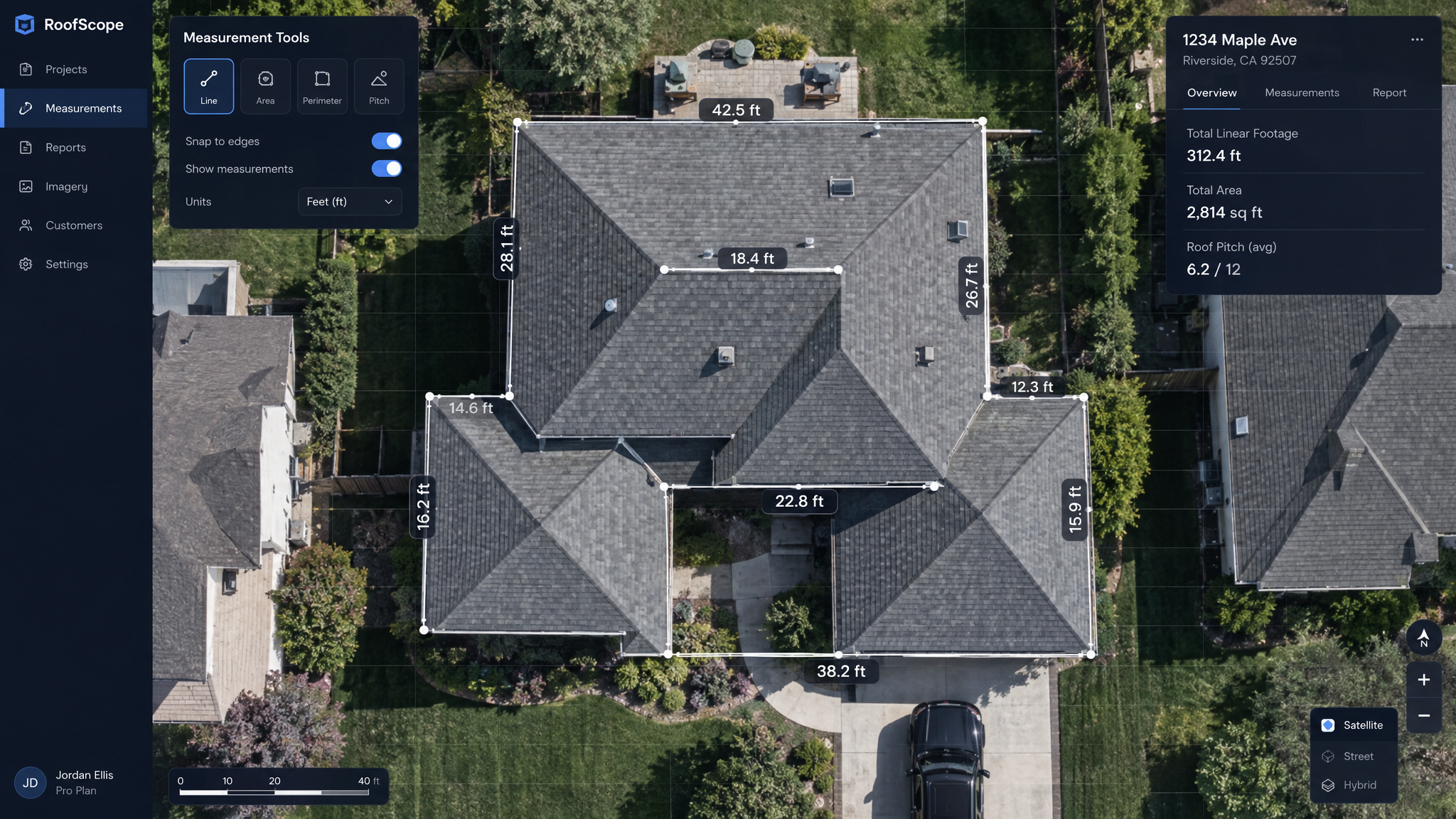
Satellite + front-photo measuring

Roofline Measurement Tool: Linear Footage Without a Ladder

Quick answer

LightingBid Pro's roofline measurement tool gives you linear footage two ways: trace the eaves and ridges on satellite imagery (with roof pitch correction for sloped runs), or trace the fascia directly on the Street View photo of the house front using a garage door as the scale. Each run becomes a zone that flows straight into the estimate.

  • Satellite tracing with pitch correction
  • Front-photo measuring with perspective correction
  • AI measure suggestions you can edit
  • Tape-measure accuracy tracking
Try it free for 14 days $50/month after trial · 2 users included · Updated
Roofline traced on satellite imagery with linear footage per zone

How to measure a roofline remotely

  1. 1

    Find the house

    Enter the address. The satellite view centres on the home and the front photo loads below.

  2. 2

    Trace on satellite

    Tap along each eave. Set the roof pitch for sloped rakes so their true length is counted.

  3. 3

    Or trace the front photo

    Tap the four corners of the garage door, pick its size (for example 16 ft), then trace the eave, gable and second-story runs.

  4. 4

    Review the zones

    Check each zone’s footage, remove anything you won’t light and send the total to the estimate.

Satellite vs. front photo: when to use each

MethodBest forWatch out for
Satellite tracingEaves and ridges seen from above, large homes, back sidesSloped runs need pitch; tree cover can hide edges
Front-photo tracingThe facade the homeowner sees: gables, peaks, second-story eavesNeeds a clear view and a known reference like a garage door
Tape measureConfirming footage on install dayRequires a site visit and a ladder

Why pitch correction matters for lighting

From directly above, a sloped gable rake looks shorter than it is. A 6:12 roof is about 12% longer along the slope than it appears on satellite, and a 12:12 roof about 41% longer. LightingBid Pro applies the pitch you choose so rake and gable runs are counted at their true length.

Measure it. Show it. Win it.

Measure the roofline, show the homeowner their house lit up and send the estimate, all in one app. $50/month for 2 users after a 14-day free trial. $0 today.

Measurements you can quote from

In our own tests level eave runs measured within about 1% of tape, and a 16 ft garage door read 16.1 ft on the front photo. Results vary with image quality and obstructions, so the app includes a tape-measure check: enter the installed footage after the job and see your average error over time.

Frequently asked questions

How do I calculate linear feet for Christmas lights?

Add up the length of every edge you'll light: eaves, gables and rakes (at their sloped length), ridges, peaks and any walkways or windows. A roofline measurement tool adds these for you; LightingBid Pro totals each traced zone automatically.

Can I measure a roofline from Google Maps?

You can estimate it from satellite imagery, but a plain map ruler ignores roof pitch. LightingBid Pro traces on satellite with pitch correction and also lets you measure on the Street View front photo.

How many feet of lights does an average house need?

A typical single-story home has roughly 100–200 feet of roofline to light, and two-story homes often 150–300 feet, but it varies widely. Measure each home rather than guessing.

Measure it. Show it. Win it.

Measure the roofline, show the homeowner their house lit up and send the estimate, all in one app. $50/month for 2 users after a 14-day free trial. $0 today.